MURIEL SPARK
3 STARS
 It wasn't until finishing 'The Girls of Slender Means' that I realized just how incredibly, and thoughtfully, written it is. What I had mistaken for lack of driving plot, repetitive rambling, and generally a lot of nonsense, was really the careful crafting of an author who knew exactly how to make her final point all the more poignant and unsettling. The writers authorial asides throughout the novel, combined with its non-linear narrative, point out the inevitability of the girls future. Similarly, farcical episodes of legs poking out of windows, seemingly trivial tid-bits of informations, and repeated statements eventually culminate into a map showing the unavoidable conclusion at the novels climax. The pieces suddenly fall into place and the reader can only look on in horror as the story unfolds and farce seamlessly becomes devastating tragedy. It's definitely a novel worth sticking with.
JAMES M. CAIN
Four Stars
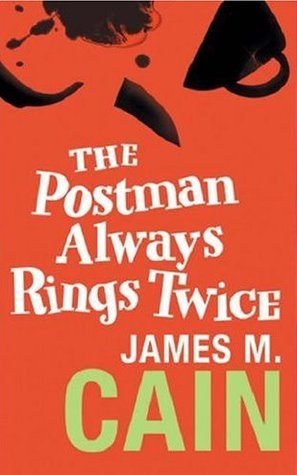 A fast paced narrative which takes off at full speed from the opening paragraph. Blunt and gritty, the pages of this short novel are filled with a cast of morally repugnant characters, seemingly devoid of any redeeming qualities and still you can't stop turning the pages- not because you're rooting for them, but because surely the consequences of their actions can't be evaded forever.

MARINA LEWYCKA
ONE STAR
I was expecting to finish this story having gleaned some understanding of the life of a Ukrainian immigrant living in England. I was hoping to read a more human account of the tragic events which mar the Ukraine's history than a textbook can offer. This novel was a major disappointment on both counts.
I found the presentation of the characters to be superficial. The pages are filled with detailed, repetitive accounts of clothing choices, nail polish colours, even the type of thread used to sew on buttons. Yet there is never any exploration of the characters beyond what they are choosing to wear, or not wear, as the case may be.
Much of the narrative is pieced together through phone conversations, discussing the same problems with a slight twist of the previous chapters soap opera. So much dialogue paired with such sparse descriptions of anything beyond the physical attributes they possess leaves each character both one dimensional and unlikeable.
There was the sense that some big mystery would be uncovered, that there was something deeper and more significant on the horizon, which kept me reading. As it turned out, there wasn't.

MICHELLE MAGORIAN
THREE STARS
When I read this at fourteen I couldn't put it down; I was completely enthralled. Re-reading the book over a decade later and it's not the riveting read I remember, but there's certainly enough there to keep it interesting. Whilst the main plot of the novel is centered upon Ralph's aspirations for the theatre, there are a myriad of sub plots exploring family relationships, politics within the workplace, and the constraints associated with class.
Far from being a novel revolving around one lead protagonist. the pages are packed with characters who each have their own struggles and their own challenge to piece together their lives after the war; each character brings a new dimension, and a more emotional element, to the tale.
For me, the amount of dialogue detracted from the overall flow of the story. Nonetheless, a sweeping, detailed novel that paints a striking picture of post war England, one that is carefully suited to the younger readers it is intended for.
JOHN HARWOOD
Four Stars
 Though I didn't find the initial plot between the novels protagonist, Gerard Freeman, and his mysterious pen-pal particularly compelling at first, it became progressively more intriguing, just as the ghost stories woven into the narrative became more complex.
The novel is an intricate tapestry of story telling; the tales Harwood inserts into the novel could stand alone as ingenious gothic stories in their own right, whilst their seamless transition from seemingly irrelevant asides to integral pieces in the overall plot is masterfully, and effortlessly, achieved. The conclusion, whilst not exactly an anti-climax, did strike me as hurried, which was incongruous compared with the slow, deliberate pace of the rest of the novel. Whatever the conclusion though, the novels is really underpinned by Viola's tales, and it is their haunting words that linger with you regardless of the fate of Gerard Freeman.
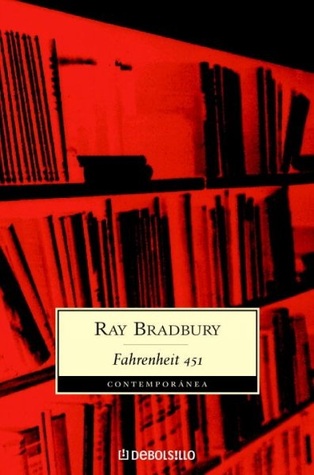
RAY BRADBURY
THREE STARS
I found the subject matter of this novel fascinating. A story surmising the perils of television, the dark possibilities associated with excess, and the hazards of political correctness; its implications are terrifying. Certainly, it's a compelling thought provoking read, especially since the hedonistic dystopian society Bradbury presents is not so alien from our own. That said, I would of enjoyed the book more if it included deeper description about the society itself, more background, more explanation about the proffered future. Of course, the rapidity of the novels pace is part of its charm, it's swift and decisive and as brisk as the chase that ensues; without sacrificing the momentum of the story, I felt there was so much that could have been expounded upon, but wasn't.

TRUMAN CAPOTE
FOUR STARS
A true crime novel- the narrative style is accordingly detached and matter-of-fact. The banal every day details, paired with the unemotional tone, amplify the shocking nature of the subject matter. A disconcerting read, one that leaves the reader appalled, terrified, and yet strangely concerned for the criminals. I couldn't put it down, and not because it was enjoyable; I think I was hoping there'd be some kind of silver lining or resolution on the last page. Of course, sometimes there isn't.
